

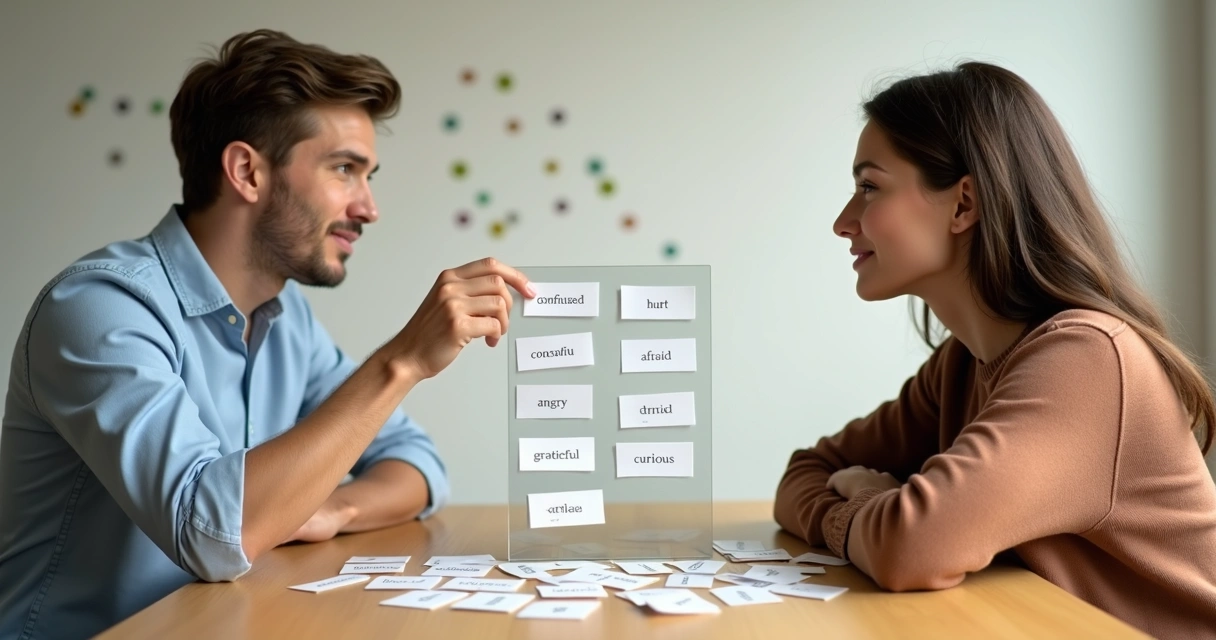
Many relationship problems do not begin with bad intent. They begin with bad naming. We feel something strong, but we say something vague. We say, “I am fine,” when we are hurt. We say, “You never listen,” when we are scared. We say, “Whatever,” when we feel rejected.
Naming emotions gives shape to inner experience, and that shape helps people understand each other.
In our experience, relationship confusion often grows in the space between what we feel and what we say. When that gap gets wide, people start reacting to tone, silence, or behavior without knowing the feeling under it. Then small moments become large conflicts.
We have seen this often. One person comes home quiet. The other reads that silence as anger. In truth, the silence came from shame after a hard day. No one names it. Both defend themselves. The night turns cold.
Unspoken feelings create false stories.
What naming emotions really does
Naming emotions is not about sounding polished or clinical. It is about saying, as clearly as we can, what is happening inside us. That may sound simple, but it changes the whole tone of a relationship.
When we can say, “I feel dismissed,” instead of “You do not care,” we reduce blame. When we say, “I feel nervous about where we stand,” instead of acting distant, we reduce guesswork. The other person may still respond poorly, but at least the message is real.
Clear emotional language lowers confusion because it separates feeling from accusation.
This matters because many couples and close friends argue about interpretation, not facts. One person thinks the issue is lateness. The other thinks the issue is control. Under both may be a more honest layer: fear, loneliness, grief, embarrassment, or insecurity.
Once that deeper layer is named, the conversation changes. We stop fighting shadows. We start meeting what is there.
Why vague feelings create distance
Vague language invites projection. If we say, “I am upset,” that helps a little. But if we can say, “I feel left out,” “I feel pressured,” or “I feel unseen,” we offer direction. The other person does not have to guess the map.
Without emotional precision, relationships can fall into repeated loops like these:
One person withdraws, and the other pursues harder.
One person becomes sharp, and the other becomes defensive.
One person asks for space, and the other hears rejection.
These loops are painful because the visible behavior hides the true emotional signal. A cold reply may hide disappointment. Criticism may hide helplessness. Silence may hide fear of saying the wrong thing.
We think this is why so many people say, “We keep having the same argument.” In many cases, they are not dealing with the same topic. They are repeating the same unnamed emotion.

How naming emotions builds trust
Trust is not built only by honesty about events. It is also built by honesty about experience. When we name what we feel, we show that we are willing to be seen without hiding behind attack or performance.
That kind of openness can soften a tense moment. It can also help the other person respond with more care. Instead of hearing a complaint, they hear a human state.
We can see this in simple shifts:
“You are ignoring me” becomes “I feel unimportant when I do not get a response.”
“You always overreact” becomes “I feel overwhelmed and do not know how to stay present.”
“Nothing is wrong” becomes “I feel hurt, but I am not ready to talk yet.”
These statements do not solve everything on their own. Still, they create a cleaner emotional field. They make repair more possible because they reduce distortion.
This pattern has support beyond personal observation. In a university-hosted study of couples using relationship pattern labeling, researchers found small but statistically significant gains in intimacy, acceptance, and relationship satisfaction after people labeled recurring emotional and interaction patterns. That points to something many of us feel in real life: when we can name what keeps happening between us, we relate with more clarity.
What gets in the way
Many people were never taught emotional vocabulary. They learned to talk about actions, results, and duties, but not inner states. So when conflict comes, they may know they feel “bad” or “mad,” but not much more.
There are also old fears. Some people think naming feelings makes them weak. Others fear being misunderstood, rejected, or judged. In our view, these fears are common and understandable. Still, they often keep relationships stuck.
If we cannot name what we feel, we often act it out instead.
That acting out can look like sarcasm, control, distance, overexplaining, shutdown, or constant tension. The body speaks when words fail. The problem is that behavior is easy to misread.
A person may say, “I do not need anything,” while every gesture says, “Please notice my pain.” That split is exhausting for both sides.
Simple ways to start
We do not need perfect emotional language to begin. We only need more honesty than we had yesterday. A useful start is to slow down and ask: what am I feeling under my reaction?
Sometimes it helps to sort feelings into groups before choosing the exact word.
Anger group: irritated, resentful, offended, bitter
Fear group: anxious, insecure, uneasy, afraid
Sadness group: disappointed, lonely, hurt, discouraged
Connection group: grateful, safe, close, hopeful
We have found that one sentence can open a new path: “What I am feeling is...” Then stop. Do not explain too fast. Let the feeling be named before the argument takes over.
Another helpful practice is to name both emotion and trigger in one line. For example: “I felt embarrassed when that joke was made in front of others.” That gives context without becoming a long defense.
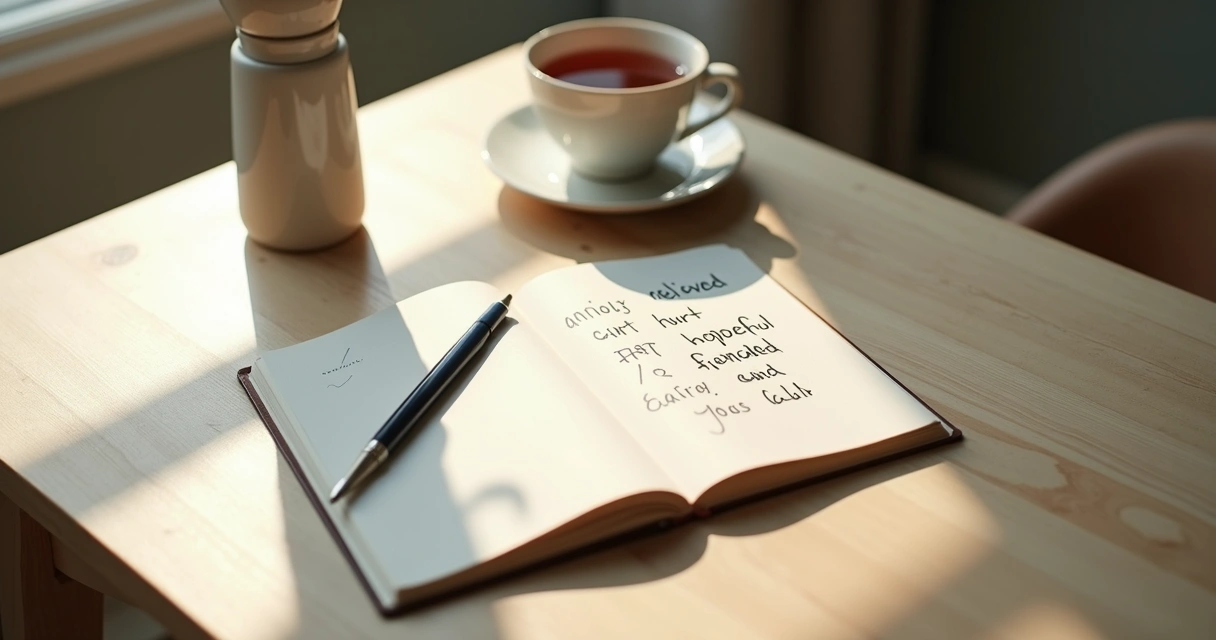
Relationship clarity changes everyday moments
When emotional naming becomes a habit, relationships often become less dramatic and more real. Not perfect. Just clearer.
We notice this most in ordinary moments. A partner says, “I am tense, not angry.” A friend says, “I felt forgotten.” A parent says, “I am worried, so I sound controlling.” These small corrections prevent larger injuries.
Clarity does not remove pain. It gives pain a language that others can meet. That is a very different thing.
And there is a personal gain too. When we name our own emotions with accuracy, we become less ruled by them. We can respond with more steadiness because we are no longer trapped in a blur.
Conclusion
Relationship clarity grows when feelings become speakable. Naming emotions helps us say what is true before confusion turns into blame, silence, or distance. It supports honesty, lowers projection, and makes repair easier. In our view, this is one of the most human skills we can practice.
We do not need perfect words. We need honest ones. A relationship changes when “You are the problem” becomes “This is what I feel.” That shift is small in form, but deep in effect.
Name the feeling. Change the connection.
Frequently asked questions
What does naming emotions mean?
Naming emotions means putting clear words on what we feel inside. Instead of staying with broad terms like bad or upset, we identify more exact feelings such as hurt, anxious, ashamed, relieved, or disappointed. This helps us understand ourselves and communicate with others more clearly.
How can naming emotions help relationships?
It helps relationships by reducing guesswork and blame. When we name a feeling clearly, the other person can respond to what is real instead of reacting to unclear behavior. This often leads to calmer talks, less defensiveness, and better repair after conflict.
Why is emotional clarity important?
Emotional clarity matters because vague feelings often turn into mixed signals. If we do not know whether we feel rejected, pressured, lonely, or afraid, we may speak in ways that confuse others. Clear emotional awareness helps us act with more honesty and steadiness.
How do I start naming emotions?
We can start by pausing and asking what feeling sits under our reaction. It helps to use simple emotion lists and choose the closest word. A useful sentence is, “What I am feeling is...” Then we can add the trigger in plain language, without turning it into an accusation.
Is it worth it to name feelings?
Yes. Naming feelings can make relationships easier to understand and easier to repair. It also helps us know ourselves better. Even when the talk is hard, clear emotional language creates a more honest bond than silence, denial, or blame.