

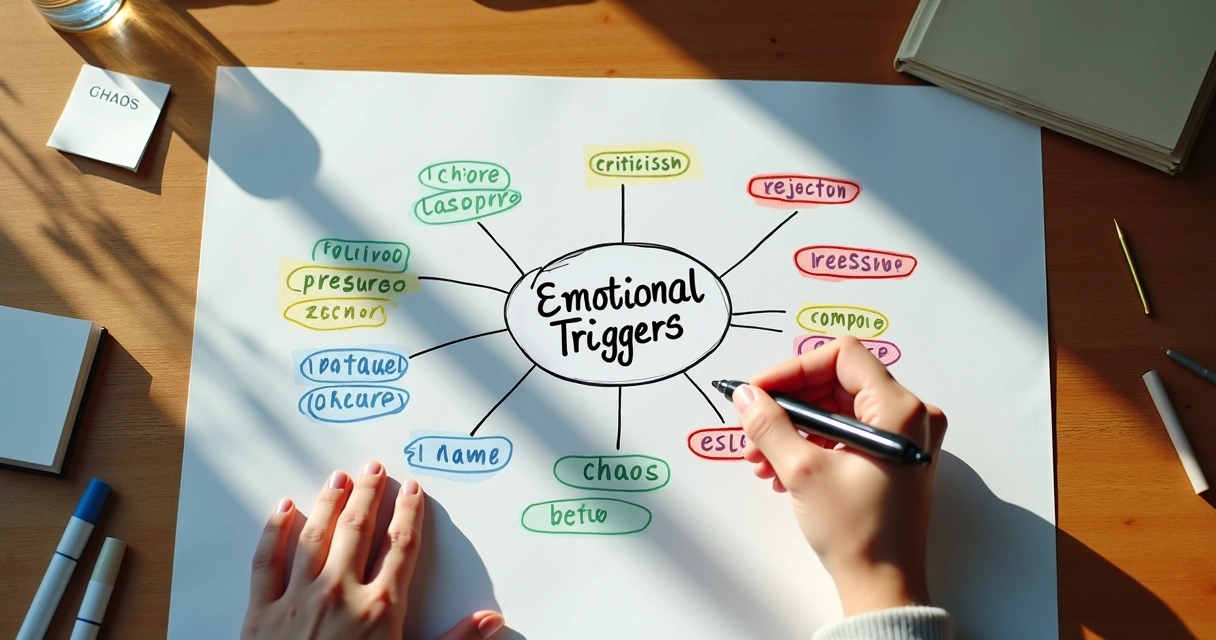
We all have moments that seem bigger than the situation in front of us. A short reply feels harsh. A delayed message feels like rejection. A loud sound turns a calm morning into tension. In those moments, we are not only reacting to the present. We are also reacting to meaning, memory, expectation, and fear.
Emotional triggers are signals that point to unfinished patterns, not proof that something is wrong with us.
When we map our triggers, we stop treating reactions as random. We start seeing structure. That shift can change the way we relate to ourselves, our work, and other people.
What emotional triggers really are
An emotional trigger is any event, tone, word, image, behavior, or sensation that activates a strong inner reaction. The trigger itself may look small from the outside, but inside it can release anger, shame, panic, sadness, or the need to withdraw.
We have seen this in simple, everyday scenes. Someone gets interrupted in a meeting and goes silent for the rest of the hour. Another person hears chewing sounds and feels instant irritation. Someone receives neutral feedback and reads it as personal failure.
Small moment. Big reaction.
Triggers often connect to past experiences, learned beliefs, unmet needs, or repeated stress. They may also involve physical sensitivity. For example, a student survey on misophonia symptoms and trigger responses found that around 16.4% met criteria for elevated symptoms, and many reported annoyance, anger, and distress when exposed to certain sounds. This reminds us that triggers are not always symbolic. Sometimes the body reacts fast and strongly to specific stimuli.
Why mapping matters
Noticing a trigger is one thing. Understanding it is another. We think this difference matters because simple awareness does not always help on its own.
When we pay attention to emotions without clarity, we can become more overwhelmed instead of more aware.
That idea is supported by research on emotional clarity, attention, and resilience. In that study, people with both emotional attention and emotional clarity showed better resilience and a more positive self-view. But attention without clarity was linked to lower self-esteem and more anxiety and depression symptoms. In plain terms, seeing that we feel bad is not enough. We need to know what we are feeling, why it rises, and what it asks from us.
That is where trigger mapping helps. It gives shape to what first feels chaotic.
How to start your trigger map
We do not need a perfect system. We need a usable one. A notebook, a notes app, or a printed page can work well. The point is to capture reactions close to the moment, while the details are still alive.
Our experience suggests starting with five fields:
- Situation: What happened right before the reaction?
- Emotion: What did we feel first?
- Intensity: How strong was it from 1 to 10?
- Meaning: What story did our mind create about it?
- Response: What did we do next?
For example, we may write: “My message was ignored for three hours. I felt anxious, intensity 8. I told myself I was being dismissed. I sent two more messages and then felt embarrassed.”
That short record already shows a chain. Event. Feeling. Interpretation. Action.

What to look for over time
After a week or two, patterns usually begin to show. We may notice that the same type of event keeps activating us. It is rarely just one isolated moment.
Look for recurring categories like these:
- Feeling ignored or unseen
- Being corrected in public
- Unclear communication
- Changes of plan without warning
- Certain tones of voice
- Specific sounds, spaces, or sensory overload
We should also notice timing. Some triggers rise more when we are tired, hungry, rushed, or already carrying stress. A reaction that seems emotional may also be linked to nervous system strain.
This is why trigger mapping should include context, not only content. The same comment can feel manageable on one day and painful on another.
How to separate trigger from fact
One of the hardest parts of self-understanding is this: the trigger feels true. In the moment, our reaction often seems fully justified. Sometimes it is. Sometimes it is not.
We have found it helpful to ask three questions after the event:
- What actually happened?
- What did we assume it meant?
- What older feeling might this have touched?
That middle question can change everything. “They hate me” may become “They were brief.” “I am failing” may become “I felt exposed.” “This is unbearable” may become “This sound always creates tension in my body.”
A trigger map helps us distinguish the event from the story we attach to it.
That distinction does not erase emotion. It gives us room to respond with more honesty.
How to respond once a trigger appears
Mapping is not only for reflection after the fact. It also trains us to act with more steadiness in real time. Once we know our common triggers, we can create small response plans.
These plans can include:
- Pausing before replying
- Naming the emotion in simple words
- Stepping away from the environment for two minutes
- Asking for clarification instead of assuming intent
- Writing first and speaking later
- Reducing sensory exposure when possible
We once worked with a person who thought anger was the main issue. After tracking reactions, a different pattern appeared. The anger came second. First came shame. That insight changed the response plan. Instead of trying to suppress anger, the person learned to notice the earlier collapse inside. From there, better choices became possible.
Name it early.

When trigger mapping becomes deeper self-knowledge
Over time, our trigger map starts to reveal more than reactions. It shows our values, fears, wounds, and needs. We may discover that we react strongly to disrespect because dignity matters deeply to us. We may see that silence hurts because we link it with abandonment. We may learn that control feels safe because unpredictability once felt threatening.
This is where self-understanding matures. We are no longer asking only, “Why did I react like that?” We are asking, “What inner structure keeps producing this reaction?”
That question asks for honesty. It also builds freedom.
Conclusion
Mapping emotional triggers is a practical way to know ourselves with more depth and less judgment. It helps us move from confusion to pattern, from automatic reaction to conscious response. We begin to see that our strongest reactions carry information. Some point to pain. Some point to sensitivity. Some point to needs we have not yet named.
If we stay with the process, a trigger stops being just a problem. It becomes a path to clearer emotional understanding, steadier behavior, and more coherent choices.
Frequently asked questions
What are emotional triggers?
Emotional triggers are events, words, behaviors, memories, or sensory experiences that create a strong emotional reaction. They often activate feelings that connect to past experiences, personal beliefs, or nervous system sensitivity.
How to identify my emotional triggers?
We can identify triggers by tracking situations that lead to strong reactions. Write down what happened, what you felt, how intense it was, what you thought it meant, and how you responded. Repeated patterns usually become clear after several entries.
Why should I map emotional triggers?
Mapping triggers helps us understand why certain moments affect us so deeply. Instead of seeing reactions as random, we start to recognize patterns tied to needs, fears, stress, or old emotional pain.
How can mapping triggers help me?
It can help by increasing emotional clarity, reducing impulsive reactions, and improving communication. When we know what tends to activate us, we can pause earlier, choose better responses, and relate to ourselves with more awareness.
What is the best way to track triggers?
The best way is the one we can keep doing. A simple journal, phone note, or daily reflection page works well. The most useful method is one that records the event, emotion, intensity, interpretation, and response in a consistent way.